Votre emplacement
Les options de livraison diffèrent selon les zones
Connectez-vous pour actualiser votre adresse
Equipment dedicated to JKA (Japan Karate Association) Karate embodies the historical precepts and technical rigor of the traditional Shotokan style. Intended for demanding practitioners, instructors, and competitors operating under JKA rules, these items combine robust cotton fabrics with authentic Japanese cuts. To perfect your martial attire according to the organization’s criteria, also explore the JKA karate belts adapted for official grading examinations.
Frequently Asked Questions – JKA Karate Products
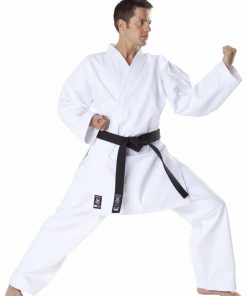
Equipment approved by the Japan Karate Association is distinguished by its strict conformity to traditional Shotokan martial criteria. Unlike contemporary sports standards, karate-gi prioritize a classic Japanese cut, characterized by fitted sleeves stopping at the forearms and a long jacket that stabilizes the center of gravity during low stances.
Combat equipment also adheres to a strict protocol where traditional kumite is performed with thin, streamlined JKA-approved white mitts, without bulky protection. Finishes frequently include the embroidered label or the official Inyo emblem, a symbol of authenticity and recognition among international instructors.
Read more (features, tips, and full description)
▼
Models developed for JKA practice meet precise technical requirements, focused on longevity and the sharpness of martial movement:
Heavy pure cotton fabrics: Predominant use of brushed canvas between 10 oz and 14 oz offering a rigid hold and a crisp acoustic snap during kata execution.
Specific combat gloves: Streamlined white mitts providing knuckle protection while allowing traditional open grabs and blocks.
Official embroideries: Presence of the red and white emblem or specific kanji inscriptions on the jacket panel and belts.
Reinforced seams: Multiple bar tack stitches at the lapels, pant hems, and armholes to resist violent grabs during conventional training.
Maintaining the rigidity and whiteness of a heavy cotton uniform requires an adapted washing method:
Initial cold soak and wash: Perform the first cycles in cold water without excessive wringing to stabilize the natural weave and limit mechanical shrinkage.
Use of a neutral detergent: Wash at a maximum of 30°C, avoiding any chlorinated bleaching agents to preserve the brilliance of the fibers and the threads of the original embroideries.
Natural drying on a hanger: Hang the jacket and pants in the open air, away from direct heat sources, as tumble drying is strictly prohibited.
Common problem: Many practitioners are unaware if their two-tone (blue or red) WKF uniforms and protectors are accepted during JKA-organized seminars and tournaments.Solution: Japan Karate Association regulations require a sober and traditional uniform. Red or blue WKF protectors and colored shoulder embroideries are prohibited on JKA tatami, where only approved white mitts and plain uniforms are tolerated. To fully understand the geometric differences between each standard, consult our guide on traditional and European karate-gi cuts.
Martial excellence serving the Shotokan JKA tradition
Practice within the Japan Karate Association requires equipment that faithfully respects the sobriety and rigor of the Shotokan school. Designed by historic workshops, the referenced models prioritize noble pure brushed cotton fabrics, capable of offering exemplary resistance to repeated grabs and powerful strikes. Reference brands like Tokaido karate-gi guarantee a perfectly balanced cut that enhances rectilinear trajectories and the power of stances. By opting for approved equipment, karateka benefit from the most demanding Japanese standards, validated by decades of training at the central dojo in Tokyo. To delve deeper into the criteria for crafting exceptional pieces, you can explore the secrets of high-end karate-gi made in Japan.
To complete your equipment, discover the reference model Kamikaze INTERNATIONAL JKA karate-gi, as well as our complete guide on karate belt customization and embroidery.