Votre emplacement
Les options de livraison diffèrent selon les zones
Connectez-vous pour actualiser votre adresse
Choosing your competition Karate Gi is no longer just a matter of buying a white uniform and folding it in your bag between a belt and a mouthguard; it’s a choice that influences the way you feel on the tatami, the way you move, and sometimes even the confidence you exude before the first bow, because there’s that precise moment, a few minutes before entering the combat area, when you adjust your jacket, tighten your belt a little more than usual and breathe deeply to calm your heartbeat, and that’s when you realize whether the fabric you’re wearing is a weight you’d happily do without… or not.
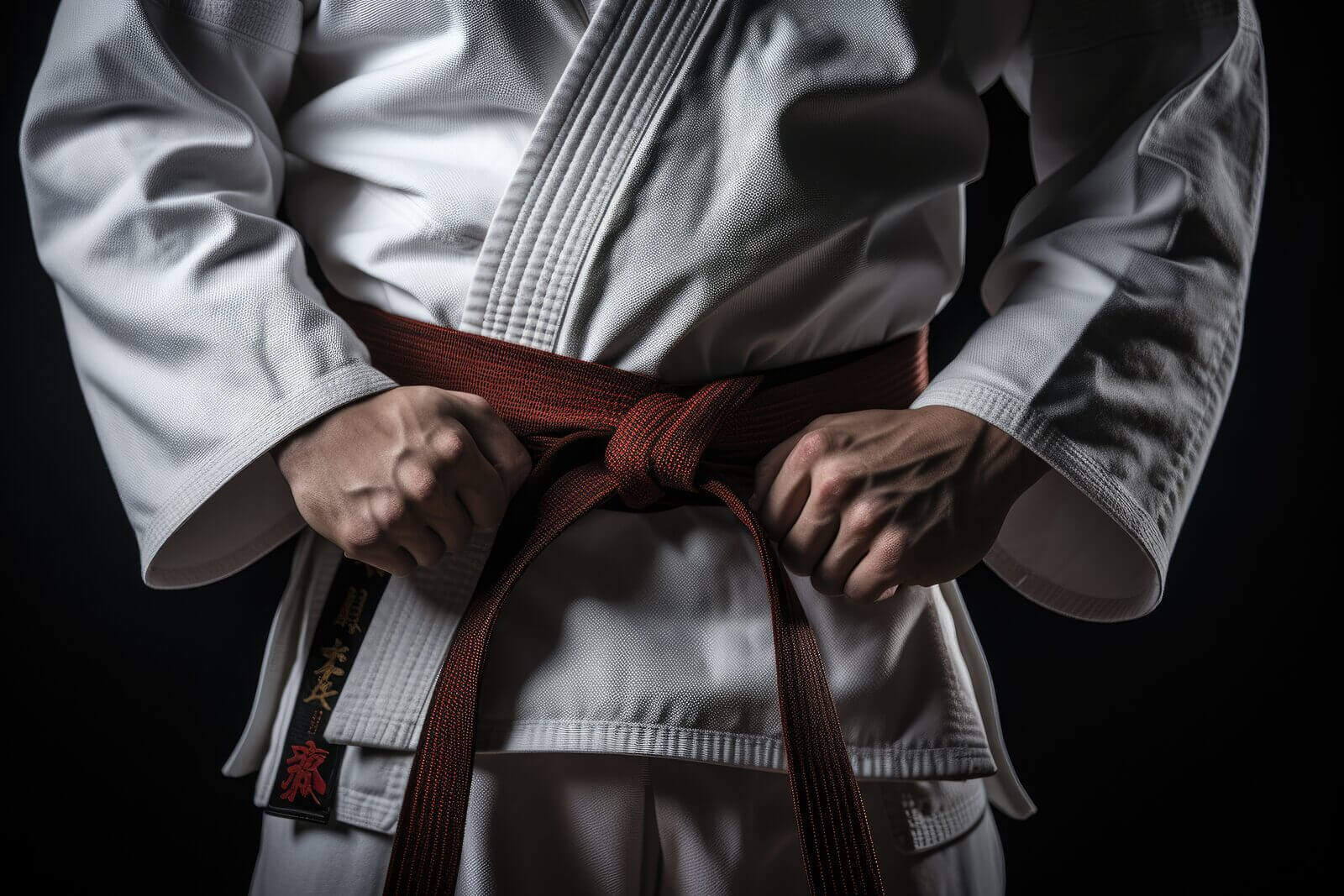
Under the aegis of the World Karate Federation, the controls are fairly strict, the requirements more precise and the margin for error smaller, but beyond the labels and centimetres measured by the referees, there’s one thing that can’t be bought easily: the feeling of wearing the right karate gi. feeling of wearing the right karate gi.
Finally, a kata is not just a series of rigorously executed techniques: it’s a demonstration of mastery, presence and energy projection. In this balance between aesthetics and explosiveness, the karate gi you wear plays a role. We often underestimate it, until the day we wear one that really fits.
The famous “snap” – that sharp snap – is not a gadget, but a signature that echoes around the gym and influences the judges’ perception, sometimes without you even realizing it. Too light, the gi absorbs energy and makes techniques silent; too heavy, it strains shoulders and slows transitions. This is why many experienced competitors return to a 12 oz. weight dense enough to produce sound and presence, but light enough to allow rapid hip rotations.
A little test: fold the sleeve between your fingers. If the fabric retains its rigidity and resists slightly, you’re probably looking at a gi designed for kata; if it sags, it will never give that feeling of light armor that characterizes elite competitors.
Kumite follows a completely different logic. The gi is almost obliterated, because in the rapid exchange of attacks and counter-attacks, every gram counts. Modern models in microfibers or ultra-light polyester reduce weight to less than 800 g, allowing sideways movement and fast strokes without discomfort.
Experience confirms it: a good Kumite gi is forgettable, goes with the flow, breathes with you (and even dries quickly! ✅ ). On the other hand, be careful with some Kumite karate gis, so that the fabric on wet skin doesn’t slow down your movements. A good Kumite karate gi should glide, never stick.
Many competitors focus all their attention on weight or brand. However, they forget something less predictable: the actual size after washing. Dense cotton can shrink by several centimetres, and the slightest shift can turn a perfectly fitting gi into a garment slightly too short for competition.
Tip: always allow a small margin and understand how fabric evolves over time.
The World Karate Federation (WKF) has tightened controls. Here’s what you need to check:
Your Karate Gi should last for years if you follow certain rules:
Some competitors lightly iron the collar before a competition to regain optimum stiffness.
(But don’t forget that, when it comes down to it, the good karate gi is the one that gives you confidence even before you step on the tatami ✅ )
KGI-Bienvenue
Valid on ALL the Karate-Gi store
(excluding Promotions, Weapons, Arawaza, Shureido and Century bags).


